TMS for Depression:
A non-medication treatment option for adults who still feel stuck despite therapy, medication, or both.
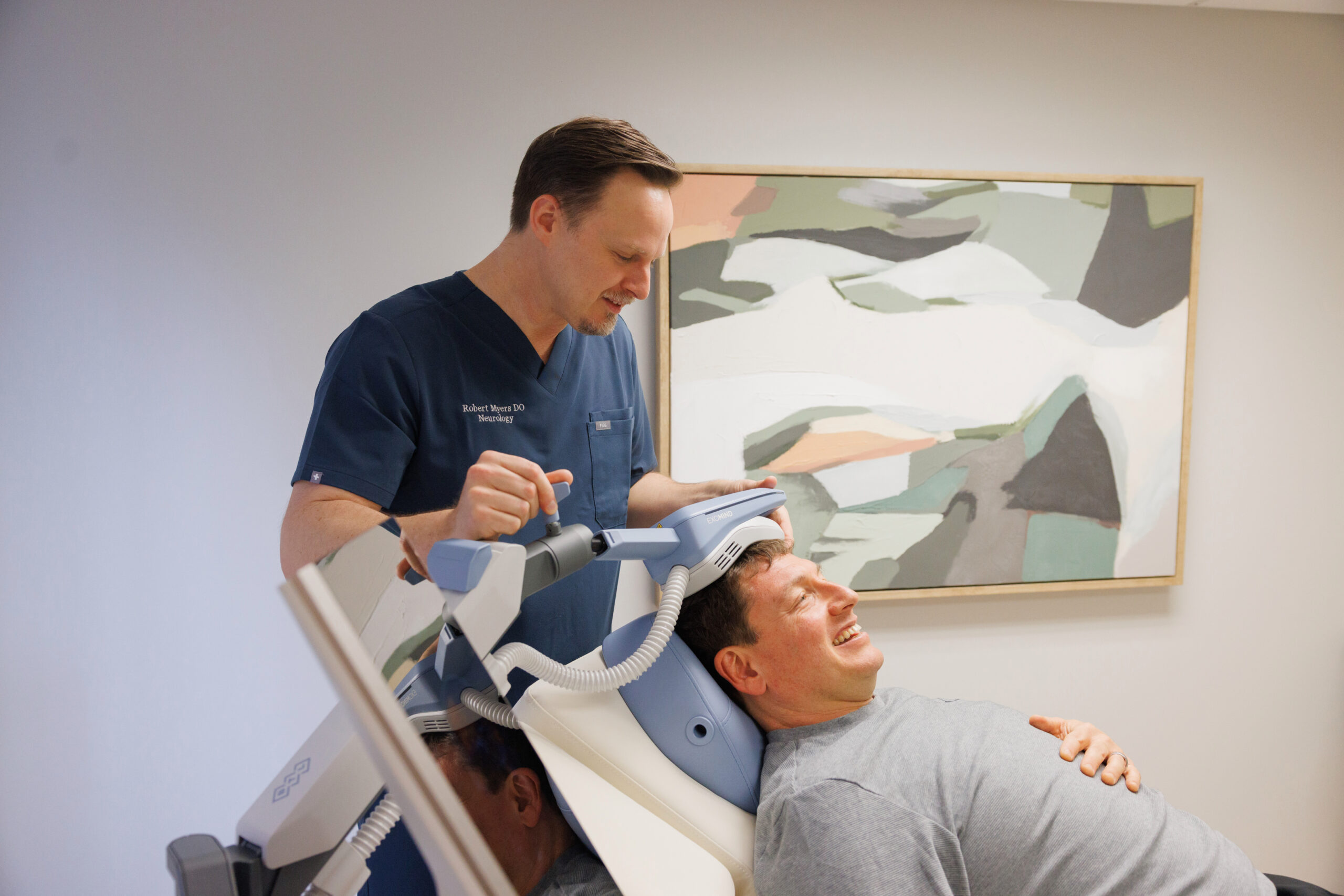
Transcranial magnetic stimulation (TMS) is an FDA-cleared, non-invasive treatment for major depressive disorder. It uses gentle magnetic pulses to stimulate specific areas of the brain involved in mood regulation, without medication, anesthesia, or downtime.

How TMS works
Depression can involve patterns of brain activity that become difficult to shift on their own. TMS targets areas of the brain associated with mood regulation, particularly the dorsolateral prefrontal cortex, using gentle magnetic pulses to stimulate neural activity and support the brain’s capacity for change.
This is not a sedation procedure. Patients sit comfortably during treatment, remain fully alert, and can return to normal activity immediately after each session.

Non-invasive
No surgery, no needles, no anesthesia

No systemic side effects
TMS does not circulate through the body the way medication does. It does not commonly cause weight gain, sexual dysfunction, nausea, or emotional blunting.

No downtime
Most patients drive themselves to and from sessions and return to their day immediately after.

FDA cleared
For the treatment of major depressive disorder.
Faster Results at Navira
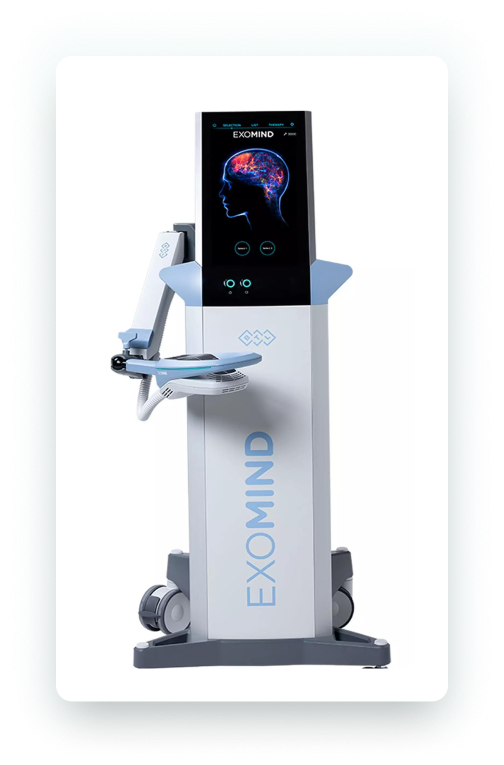
Navira uses the ExoMind TMS system — an FDA-cleared treatment for depression designed to deliver targeted stimulation to the brain circuits involved in mood.
What makes it different is not the outcome — it’s the structure.
FDA-cleared for depression
Similar response rates to standard TMS
6 sessions instead of 30–40
Traditional TMS protocols often require daily treatments over several weeks. ExoMind is designed to deliver treatment in a shorter, more practical format. At Navira, this means a starting series of just 6 sessions over 3 weeks.
Treatment is done in a chair, with no restraint, sedation, or recovery time. Most patients relax, listen to music, or simply sit quietly during the ~25-minute session.
All treatments are conducted in-office under Dr. Myers’ supervision.

When medication and therapy are not enough
TMS is not a first-line treatment. It is most often considered when:
One or more antidepressant medications have not produced sufficient relief
Side effects from medication have been problematic
Therapy has helped but depression persists
A patient prefers a non-medication option
TMS can be used alongside both therapy and medication. It does not require stopping existing treatment.
Safety & Tolerability
TMS has a favorable safety profile compared with many antidepressant medications. Because it does not circulate through the body, it does not commonly cause the systemic side effects associated with medication.
The most common side effects are mild scalp discomfort or headache during or shortly after treatment, particularly early in the series. These typically diminish as treatment continues.
Non-Invasive
No anesthesia required
No Downtime
Drive yourself home after
CONTRAINDICATIONS
- Certain metal or electronic implants near the head may prevent treatment.
- A history of seizures or intracranial mass lesions may also make TMS unsuitable.
- Substance use and all safety factors are reviewed by Dr. Myers before treatment.
Two Ways to Access TMS At Navira
Navira offers both insurance-covered TMS and a direct-pay option. Both are led by Dr. Myers and include the same standard of clinical care.
Insurance Covered
Standard TMS protocol
- Standard TMS protocol: 30 to 40 sessions over approximately 6 to 8 weeks.
- 5 sessions per week, approximately 30 minutes per session.
- Covered by many insurance plans, subject to approval requirements.
Exomind Direct-Pay
Shorter starting series
- Shorter starting series: 6 sessions over approximately 3 weeks
- 2 sessions per week, approximately 25 minutes per session.
- Clear, transparent direct-pay pricing. No prior authorization required.
- Available now.
Evidence And Outcomes
TMS is an FDA-cleared treatment for depression with a substantial body of clinical evidence supporting its use. It is part of standard clinical care and is included in major treatment guidelines as an evidence-based option for depression. Response rates are comparable to antidepressant medications, and it is widely used in clinical practice.
Some patients experience significant improvement or remission. Others experience more modest benefits. Response varies, and outcomes cannot be guaranteed. Dr. Myers reviews expected benefits, limitations, and fit during the consultation.
For many patients, relief from a course of TMS lasts 6 – 12 months. Maintenance and booster sessions are available to help protect those gains over time.
EVIDENCE-BASED
Included in major treatment guidelines
FDA-CLEARED
Treatment for depression
6–12 MONTHS
LONG-TERM SUCCESS RATE
From Dr. Myers
Dr. Myers writes about pain, neuroplasticity, and TMS. Articles will be added here as they are published.

How Does an Occipital Nerve Block Work for Headaches?
When a headache keeps returning, it can feel as though the pain has taken control of your nervous system. Medication may help temporarily, but some people continue to experience headaches,

Is an Occipital Nerve Block Right for Your Migraines?
If migraines continue to interrupt your work, sleep, focus, or daily routine, you may be searching for an option beyond another medication. One treatment you may come across is an

Non-Drug Depression Treatment Options: Is TMS Right for You?
When depression keeps coming back, daily life can start to feel heavier than it should. You may still show up for work, take care of responsibilities, and try to push
TMS for Pain
Transcranial magnetic stimulation (TMS) is a non-invasive treatment that uses magnetic pulses to influence brain activity. While it is best known as an FDA-cleared treatment for depression, researchers are increasingly studying its role in pain.
Chronic pain is not only related to the body; it also involves how the brain processes and responds to pain signals. Over time, the brain’s pain networks can become more sensitive, continuing to generate pain even when there is no clear ongoing injury. TMS works by targeting specific areas of the brain involved in these networks, with the goal of reducing that heightened sensitivity and supporting a more regulated response to pain signals.
Research is ongoing, but early studies suggest that TMS may be helpful for certain types of chronic pain, including neuropathic pain, fibromyalgia, and migraines.
TMS is non-invasive, does not require medication, and is generally well tolerated. At Navira Brain & Body, TMS for pain is offered on a direct-pay basis for select patients after clinical evaluation by Dr. Myers.

TMS is non-invasive, does not require medication, and is generally well tolerated. At Navira Brain & Body, TMS for pain is offered on a direct-pay basis for select patients after clinical evaluation by Dr. Myers.
How TMS works
Chronic pain can change how the brain processes sensation. In some cases, the brain’s pain response becomes amplified – continuing to signal pain even without an active source of injury. This is sometimes called central sensitization.
TMS targets specific areas of the brain involved in pain processing, using gentle magnetic pulses to balance activity in those networks. The goal is not to block pain signals the way a medication might, but to help the brain regulate its response more effectively over time.

Non-invasive
No surgery, no needles, no anesthesia

Medication-free
An option for patients who prefer not to add or change medications.

No downtime
Most patients return to their day immediately after each session.

Individualized Plan
Pain treatment with TMS is variable. The protocol must be customized based on the type and location of pain. Dr. Myers will design a treatment plan specific to your condition after clinical evaluation.
Faster Results at Navira
Navira uses the ExoMind TMS system to deliver targeted magnetic stimulation. For pain treatment, the parameters — including the area of the brain targeted and the stimulation settings — are customized to the individual patient and their specific pain condition.
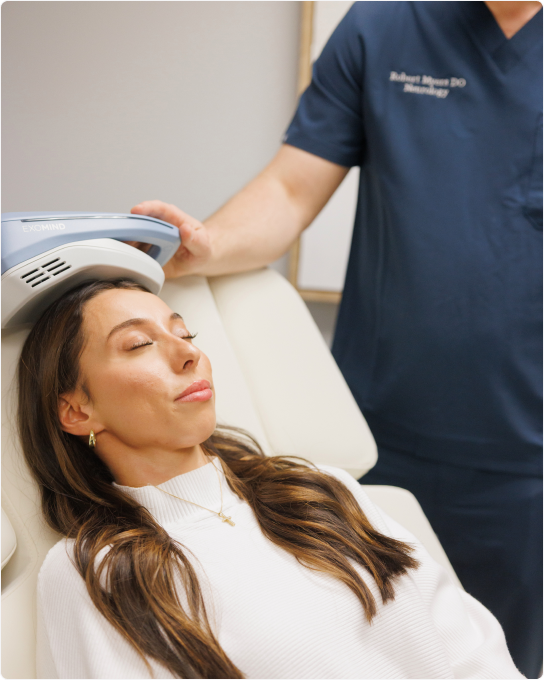
Treatment is conducted in a chair, with no restraint, sedation, or recovery time. Sessions are approximately 25 minutes. All treatments are performed in-office under Dr. Myers’ supervision.
Targeted Exomind TMS treatment
Customized for your pain condition
About 25 minutes per session
No sedation, restraint, or recovery time

Who May Benefit
TMS for pain is offered to select patients after a clinical evaluation by Dr. Myers. Conditions where TMS may be considered include:
Neuropathic pain
Fibromyalgia
Migraine
(including chronic migraine)
Other chronic pain conditions
discussed during consultation
TMS for pain is not appropriate for everyone. Dr. Myers will review your history, the type and pattern of your pain, and current treatments before determining whether TMS is a reasonable option for you.
Safety and Tolerability
TMS has a favorable safety profile. Because it does not circulate through the body, it does not produce the systemic side effects common to many pain medications. The most common side effects are mild scalp discomfort or headache during or shortly after treatment, particularly early in the series. These typically diminish as treatment continues.
CONTRAINDICATIONS
TMS may not be appropriate for patients with certain implanted metal or electronic devices in or near the head, including some aneurysm clips, cochlear implants, deep brain stimulators, or implanted stimulators. A history of seizures or intracranial mass lesions are also contraindications. Active use of recreational substances or misuse of prescription medications may reduce the effectiveness of TMS treatment and is reviewed on a case-by-case basis. Dr. Myers reviews safety criteria with every patient before treatment begins.
How to Access TMS for Pain at Navira
TMS for pain at Navira is offered on a direct-pay basis. Treatment structure, including number of sessions and frequency, is determined after clinical evaluation and is individualized based on the patient’s condition. The first step is a consultation with Dr. Myers to determine whether TMS is appropriate for your situation.
Evidence And Outcomes
Research on TMS for pain is ongoing. Early clinical studies suggest that TMS may produce meaningful reductions in pain for some patients with neuropathic pain, fibromyalgia, and migraine.
Outcomes vary by condition and individual patient. Dr. Myers will discuss the current evidence, expected benefits, and limitations during the consultation.
From Dr. Myers
Dr. Myers writes about pain, neuroplasticity, and TMS. Articles will be added here as they are published.

How Does an Occipital Nerve Block Work for Headaches?
When a headache keeps returning, it can feel as though the pain has taken control of your nervous system. Medication may help temporarily, but some people continue to experience headaches,

Is an Occipital Nerve Block Right for Your Migraines?
If migraines continue to interrupt your work, sleep, focus, or daily routine, you may be searching for an option beyond another medication. One treatment you may come across is an

Non-Drug Depression Treatment Options: Is TMS Right for You?
When depression keeps coming back, daily life can start to feel heavier than it should. You may still show up for work, take care of responsibilities, and try to push