
PATIENT-CENTERED NEUROLOGY

You Are Not Out of Options

Depression can feel like being stuck in patterns that will not shift no matter how hard you work. TMS may help.

Navira Brain & Body offers neurologist-led TMS for adults struggling with depression, including those who have tried therapy or medication and still feel like something is not moving. We take the mystery out of the process, so you know what to expect before you ever sit down for your first session.

When Working Hard Is Not Enough

Depression is not simply sadness or low motivation. For many people, it feels more like rigidity — like the brain has gotten stuck in patterns that are hard to shift, even with insight, effort, and support.

Therapy helps many people. Medication helps many people. And for others, those treatments are not enough on their own. That does not mean nothing else can help.

TMS is one tool that may help loosen those rigid patterns and create more flexibility — not as a replacement for therapy or medication, but as an additional option when other treatments have not been sufficient.

For many patients, the shift is hard to miss. The weight that made everything harder starts to lift. Getting out of bed feels less like a battle. Everyday moments like spending time with family, a quiet morning, or a conversation you feel present in all become possible again.

What is TMS?

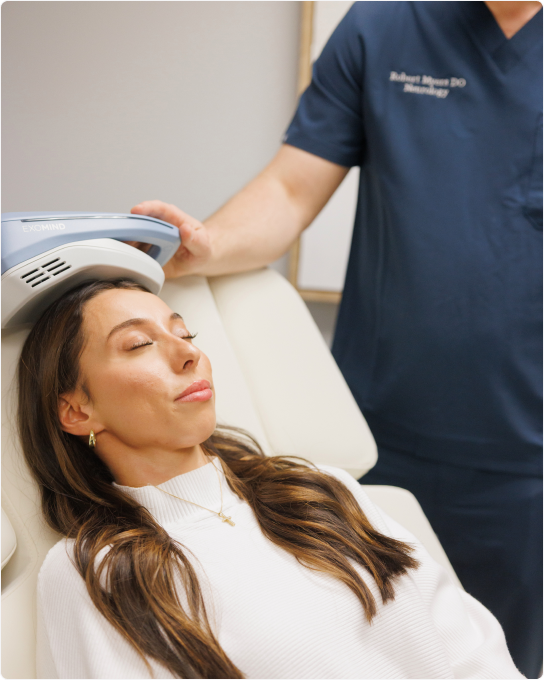
Transcranial magnetic stimulation (TMS) is a non-invasive treatment that uses gentle magnetic pulses to stimulate areas of the brain involved in mood regulation.

It is FDA cleared for major depressive disorder. It does not require medication, anesthesia, or sedation. Most patients sit comfortably during treatment and return to normal activity immediately after each session. 

Non-invasive

No surgery, no needles, no anesthesia required.

Medication-free

An option for patients who prefer not to take additional medication or who have not tolerated medications well.

No downtime

Most patients return to work or daily activities immediately after each session.

FDA cleared

For the treatment of major depressive disorder.

Who May Be a Good Fit

Consider TMS when you are not where you want to be, even if you are doing many of the right things.

Still struggling despite treatment

● In therapy and/or on medication
● Some improvement, but not fully better

Prefers a non-medication approach

● Concerned about side effects
● Does not want long-term medication
● Looking for another option

Better… but not themselves

● Low energy
● Brain fog
● Low motivation

Treatment-resistant depression

● Multiple medication trials
● Limited or no response
● Ongoing impairment

High functioning but declining

● Still working or parenting
● Increasing fatigue, burnout, or poor focus
● Not in crisis, but slipping

Recurrent depression

● History of depressive episodes
● Previously improved, now worsening again

What To Expect

Consultation

  • Meet with Dr. Myers in person.
  • Review your history, symptoms, and goals. 
  • Determine whether TMS is appropriate for you.
  • Discuss your treatment options and what to expect.

If you plan to use insurance: we handle the prior authorization process and can obtain your estimated out-of-pocket costs from your insurance provider before treatment begins.

Your First Sessions

  • Sit comfortably while the device delivers gentle magnetic pulses.
  • Sessions are approximately 25 minutes.
  • You remain awake and alert. No anesthesia or sedation.
  • You can drive yourself home and return to normal activity.

No recovery time. No grogginess. No disruption to your routine.

Progress Over Time

Most patients notice changes within the first few weeks – better sleep, lighter mood, and more energy. 

The shift is often gradual, then suddenly noticeable. Many describe it as a weight lifting.

Dr. Myers monitors your progress and adjusts the plan as needed.

Maintenance

Once you reach a stable improvement, Dr. Myers will discuss next steps. 

Options include scheduled booster sessions to protect your progress. 

The goal is to support your brain before symptoms return, not after.

How To Get Started

The first step is an in-person consultation with Dr. Myers. He will take the time to understand your history, answer your questions, and help you decide whether TMS is the right next step for you.

OMT Targets in Chronic Pain

Muscle Guarding

• Chronic pain often leads to reflexive muscle tightening (guarding), which limits motion and perpetuates pain.
• OMT techniques like muscle energy and counterstrain relieve hypertonicity, restore range of motion, and reduce nociceptive input.

Autonomic Nervous System Dysregulation

• Chronic stress/pain activates the sympathetic nervous system (fight-or-flight), worsening inflammation and reducing healing.
• OMT techniques (for example, craniosacral therapy, rib raising) help balance autonomic tone, decreasing sympathetic overactivity and enhancing parasympathetic function.

Somatic Dysfunction

• Chronic pain often localizes dysfunctions in joints, fascia, and viscera.
• Soft tissue, HVLA, and myofascial release techniques restore normal alignment and improve proprioception.