
FINANCIAL CLARITY
Clear Pricing. No Surprises.
We believe patients deserve to know what to expect before they commit to anything. This page explains how Navira’s treatment is currently structured, what it costs, and what options exist for managing that cost.
How Navira Is Structured
Navira Brain & Body offers both insurance-covered TMS and a direct-pay option for patients seeking a shorter, more flexible treatment schedule.
Insurance can make treatment more affordable, but often comes with approval requirements and longer treatment schedules. The direct-pay model was designed to offer an alternative — allowing treatment to begin without delays and structured in a way that is more practical for many patients. Both pathways provide the same standard of clinical care and are based on FDA-cleared TMS treatment.
If you plan to use insurance: we handle the prior authorization process and can obtain your estimated out-of-pocket costs from your insurance provider before treatment begins.

Accepted Payment
Credit and debit cards, Health Savings Account (HSA) cards, Flexible Spending Account (FSA) cards.

Financing
Financing options available upon request.

Out-of-network
Documentation can be provided to support reimbursement request when applicable.

Insurance
Navira accepts many insurance plans for TMS. Coverage and approval requirements vary by plan. Contact us to discuss your insurance benefits before scheduling.
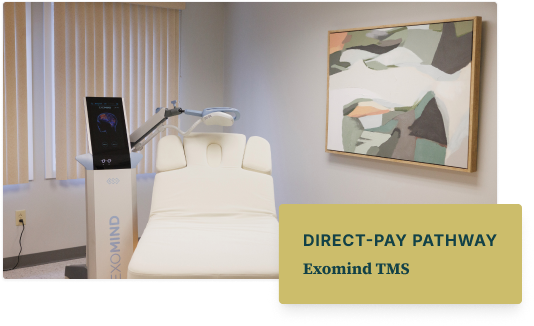
Exomind TMS: Direct-Pay Treatment
The Exomind pathway is designed for patients who want to begin depression treatment without waiting on prior authorization, prefer a non-medication approach, or want a shorter, more manageable starting point. We offer a clear starting series with straightforward pricing and no obligation to commit to more before you begin.
Initial Consultation
In-person visit with Dr. Myers. Review of medical history, symptoms, goals, and treatment fit. Opportunity to ask questions and understand what to expect. There is no obligation to proceed with treatment.
If you are using insurance, the consultation is often covered based on your plan.
If you prefer not to use insurance, the consultation fee is $100.
Consultation fee is applied toward the cost of treatment if the patient proceeds at the time of the visit.
Exomind Reset Series vs Standard TMS
Compare the intensive direct-pay series with traditional treatment schedules.
Treatment Type
Exomind Reset Series
Schedule
- 6 treatments total
- Over 3 weeks
- 25 minutes per session
Cost
- $3,000 total for the full 6-session series
- No long-term commitment required to begin.
Standard TMS
- 36 - 40 treatments
- Over 2 Months
- 5 sessions per week
- Insurance (with deductibles and copays): $1,000- 7,500
- Out of pocket: $6,000 - $15,000
- Long term commitment required to begin.
Exomind Reset Series
Schedule
- 6 treatments total
- Over 3 weeks
- 25 minutes per session
Cost
- $3,000 total for the full 6-session series
- No long-term commitment required to begin.
Standard TMS
Schedule
- 36 - 40 treatments
- Over 2 Months
- 5 sessions per week
Cost
- Insurance (with deductibles and copays): $1,000- 7,500
- Out of pocket: $6,000 - $15,000
- Long term commitment required to begin.
What happens after the reset series
After the initial reset series, patients may continue care based on how they are doing, their goals, and Dr. Myers’ clinical recommendation. There is no obligation to commit to more before you start.
Ongoing Care Options
MAINTENANCE
- One treatment approximately every 6 weeks
- Additional sessions available if needed
SUPPORT WHEN YOU NEED IT
As needed TMS booster treatments available.
Can be helpful during times of change or stress such as
- work-related stress
- life transitions
changes in sleep or routine
- Scheduled based on how you’re feeling
PRICING DISCLAIMER
Pricing is subject to clinical appropriateness. Exomind is a medical treatment and may not be appropriate for everyone. Insurance coverage is usually limited to treatment-resistant depression. Maintenance, wellness, and non-insurance uses are typically direct-pay.
Questions About Cost or Coverage?
We are happy to answer questions about pricing and payment options before you commit to anything. The first step is a consultation with Dr. Myers, where you can ask questions, review your options, and decide whether to proceed.
If you have questions before scheduling, call or email us directly.