



When depression does not fully improve, many people feel like their only option is to add another medication, increase a dose, or keep waiting for things to change.
For some patients, medication is helpful and necessary. But for others, the story is more complicated. You may feel some improvement but not enough. You may feel emotionally flat, tired, foggy, or frustrated by side effects. Or you may simply want to understand whether there is a non-drug option that supports mood without adding another prescription.
If that sounds familiar, Transcranial Magnetic Stimulation, often called TMS, may be worth learning about.
At Navira Brain & Body in Rochester, NY, care is focused on mood, focus, recovery, pain relief, and brain-body wellness through a neurologist-led approach. For the right patient, TMS may be part of a treatment plan for depression symptoms, especially when medication has not provided the relief you hoped for.
What Is TMS?
TMS stands for Transcranial Magnetic Stimulation. It is a non-invasive treatment that uses magnetic pulses to stimulate targeted areas of the brain involved in mood regulation.
Unlike medication, TMS does not work by circulating through the whole body. Instead, it is designed to activate specific brain networks from the outside, without surgery, needles, or anesthesia.
For depression, TMS is often focused on the prefrontal cortex, an area of the brain involved in mood, motivation, emotional regulation, decision-making, and cognitive control.
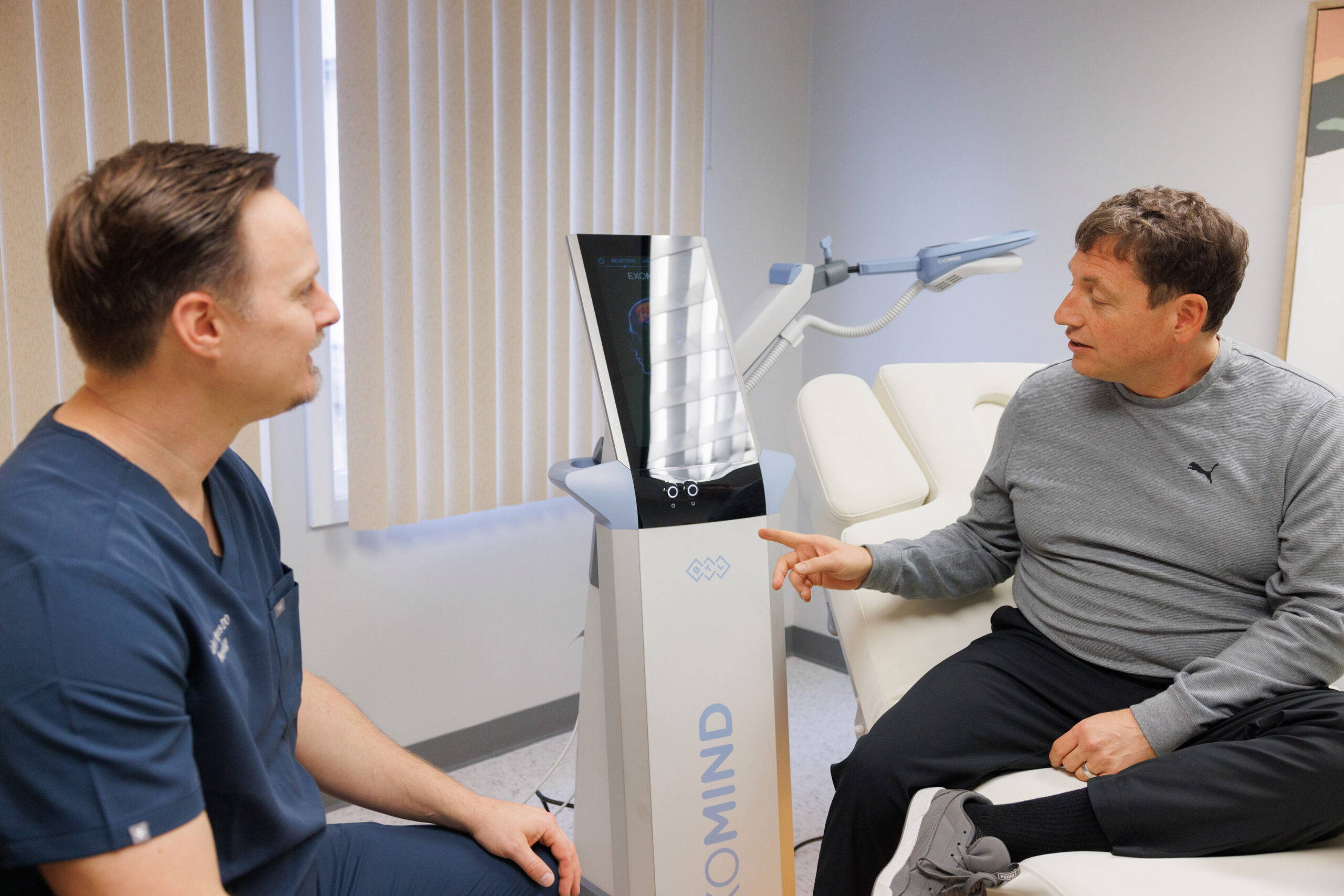
At Navira Brain & Body, Exomind TMS is used as part of a drug-free, neurologist-led care model for people looking for a more targeted way to support mood, mental clarity, and daily function.
Why Some People Look Beyond More Medication
Depression treatment is not one-size-fits-all. Some people respond well to their first medication. Others need more time, a different dose, or a different type of support. But many people reach a point where they feel stuck.
You may be wondering about TMS if you are dealing with:
- Depression symptoms that have not fully improved with medication
- Low motivation, low mood, or emotional heaviness that keeps returning
- Side effects that make daily life harder
- Brain fog, fatigue, or poor focus alongside depression
- A desire to avoid adding another medication if possible
- Frustration from trying multiple approaches without clear answers
It is important to be clear: you should not stop, reduce, or change your medication without guidance from your prescribing clinician. But it is reasonable to ask whether your current plan is giving you the best possible support.
How TMS Is Different From Medication
Medication and TMS are both used to help depression, but they work in different ways.
Medication works systemically
Antidepressant medications affect chemical signaling throughout the brain and body. This can be helpful, but it may also lead to side effects for some people, including changes in sleep, appetite, energy, sexual function, or emotional range.
TMS works through targeted brain stimulation
TMS uses magnetic pulses to stimulate specific brain regions involved in mood regulation. Because it is non-invasive and does not require medication to circulate through the body, many patients are interested in it as a non-drug treatment option.
TMS is done as a treatment series
TMS is not usually a one-time visit. Many treatment plans involve repeated sessions over several weeks. The goal is to build a consistent therapeutic effect by stimulating the targeted brain networks over time.
If you are considering TMS services in Rochester, NY, a consultation can help determine whether this type of treatment makes sense for your symptoms, history, and goals.
Who Might Consider TMS for Depression?
TMS may be considered by people who have depression symptoms and have not had enough improvement from medication, therapy, lifestyle changes, or other forms of care.
You may be a potential candidate to discuss TMS if:
- You have been diagnosed with depression or are experiencing persistent low mood
- You have tried medication but still feel stuck
- You are bothered by medication side effects
- You want to explore a non-drug treatment option
- You are looking for care that considers mood, focus, energy, and nervous system function together
- You want a medically guided plan instead of guessing what to try next
TMS is not the right fit for everyone. That is why an evaluation matters. A clinician will consider your symptoms, medical history, medications, safety factors, and treatment goals before recommending a plan.
What Depression Can Feel Like When Medication Is Not Enough
Depression does not always look like constant sadness. Some people are still working, caring for family, answering emails, and handling responsibilities while feeling disconnected inside.
You may notice:
- You can function, but everything takes more effort
- You feel emotionally flat or less interested in things you used to enjoy
- You are sleeping, but not feeling restored
- Your motivation is low even when you want to feel better
- Your focus is weaker than it used to be
- You feel like you are pushing through the day instead of living it
These symptoms matter. You do not have to wait until depression becomes severe before asking for a better plan.
The Brain-Body Connection in Depression
Depression is not just a mindset problem. It can affect the way your brain, nervous system, sleep, energy, focus, and body function together.
That is why some people with depression also experience:
- Brain fog
- Low energy
- Poor concentration
- Stress overload
- Physical tension
- Changes in sleep
- Reduced motivation
- A lower ability to recover from daily stress
At Navira Brain & Body, this broader pattern matters. The goal is not only to ask, “Are you depressed?” The better question is often, “What is happening in your brain and nervous system that may be keeping you from feeling like yourself?”
If low mood is also affecting your focus, mental clarity, or daily energy, you may also want to learn more about brain fog and cognitive fatigue.
What Happens During TMS Treatment?
While every clinic and protocol may vary, TMS treatment usually starts with an evaluation. This helps determine whether TMS is appropriate and how treatment should be planned.
1. Consultation and symptom review
Your clinician will review your symptoms, treatment history, medications, health background, and goals. This helps clarify whether TMS is a reasonable next step.
2. Treatment planning
If TMS is appropriate, the treatment area and protocol are selected based on your needs. The goal is to stimulate the brain regions involved in mood regulation in a precise and consistent way.
3. In-office sessions
During a TMS session, you remain awake. There is no surgery, no anesthesia, and no need for downtime after a typical session. Many people return to normal activities afterward.
4. Progress tracking
Because depression affects people differently, progress should be tracked through real-life changes, such as mood, motivation, focus, sleep, emotional resilience, and daily function.
For a deeper overview, you can read more about what to expect from TMS treatment.
Can TMS Replace Medication?
For some patients, TMS may reduce the need to keep adding medication. For others, it may be used alongside medication, therapy, lifestyle changes, or other forms of care.
The right approach depends on your history, symptoms, safety needs, and response to previous treatment.
The most important point is this: TMS should be discussed as part of a medically guided plan. It is not something to use as a reason to stop medication on your own. If medication changes are appropriate, those decisions should be made with the clinician managing your prescriptions.
Why Neurologist-Led TMS Care Matters
Depression is often treated as only a mental health issue, but the brain is part of the nervous system. When symptoms involve mood, focus, fatigue, sleep, cognitive function, stress overload, or pain, it can be helpful to work with a team that understands the brain-body connection.
At Navira Brain & Body, TMS care is led by a neurologist. This matters because treatment is not only about checking a box or trying another generic option. It is about understanding how your symptoms fit together and whether brain-based therapy may support your recovery.
If you are looking for support for low mood and depression symptoms in Rochester, NY, a neurologist-led evaluation can help you make a more informed next decision.
When Should You Ask About TMS?
You do not need to wait until you feel completely hopeless before asking about TMS. It may be time to explore your options if depression is affecting your quality of life and your current plan is not giving you enough relief.
Consider asking about TMS if:
- You have tried medication but still feel depressed
- You feel tired of adding more prescriptions
- You are experiencing side effects that affect daily life
- You want a non-drug option guided by a medical professional
- You are struggling with mood, energy, focus, or motivation
- You want a clearer plan instead of continuing to guess
Frequently Asked Questions About TMS for Depression
Is TMS a medication?
No. TMS is not a medication. It is a non-invasive treatment that uses magnetic stimulation to target brain regions involved in mood regulation.
Does TMS require anesthesia?
No. TMS does not require anesthesia or sedation. Patients are typically awake during treatment.
Is TMS only for severe depression?
TMS is often discussed when depression has not improved enough with medication or when medication has been difficult to tolerate. The best way to know whether it fits your situation is to complete a medical evaluation.
Will I need to stop my antidepressant before TMS?
Not necessarily. Some patients receive TMS while continuing medication. Others may have a different plan depending on their clinician’s guidance. Do not stop or change medication without speaking with the clinician who prescribed it.
How fast does TMS work?
Response time varies. Some people notice changes during the treatment course, while others need more time. TMS is usually planned as a series of sessions rather than a single treatment.
Is TMS available in Rochester, NY?
Yes. Navira Brain & Body offers TMS-related care in Rochester, NY for patients looking for a neurologist-led, non-drug treatment option for mood and brain-body wellness.
Final Thoughts: You Have More Options Than “Just Add Another Medication”
If you are feeling depressed and tired of adding more medication, it does not mean you are out of options. It may mean your next step should be more targeted.
TMS offers a non-invasive, medication-free approach that may help support mood regulation for the right patient. It is not a shortcut, and it is not right for everyone, but it can be a meaningful option to explore when depression treatment has not brought enough relief.
If you are in Rochester, NY and want a clearer, medically guided path forward, Navira Brain & Body can help you understand whether TMS fits your symptoms, goals, and treatment history.