


If you are exploring TMS in Rochester, NY, one of the most common questions is simple: how does TMS actually work? Many people have heard of Transcranial Magnetic Stimulation but are still unsure what it does, what it feels like, or whether it is anything like older treatments sometimes called “shock therapy.”
At Navira Brain & Body, we believe patients deserve a clear explanation. TMS, or Transcranial Magnetic Stimulation, is a non-invasive treatment that uses targeted magnetic pulses to stimulate specific brain circuits involved in mood, focus, stress response, and emotional regulation. It is commonly used for depression and may also be considered as part of a broader neurologist-led care plan for people dealing with burnout, brain fog, or persistent nervous system overload.
This guide explains TMS from a patient-friendly, neurologist-led perspective so you can better understand what is happening in the brain, why certain areas are targeted, and why TMS feels very different from what many people imagine.
What TMS Is and What It Is Not
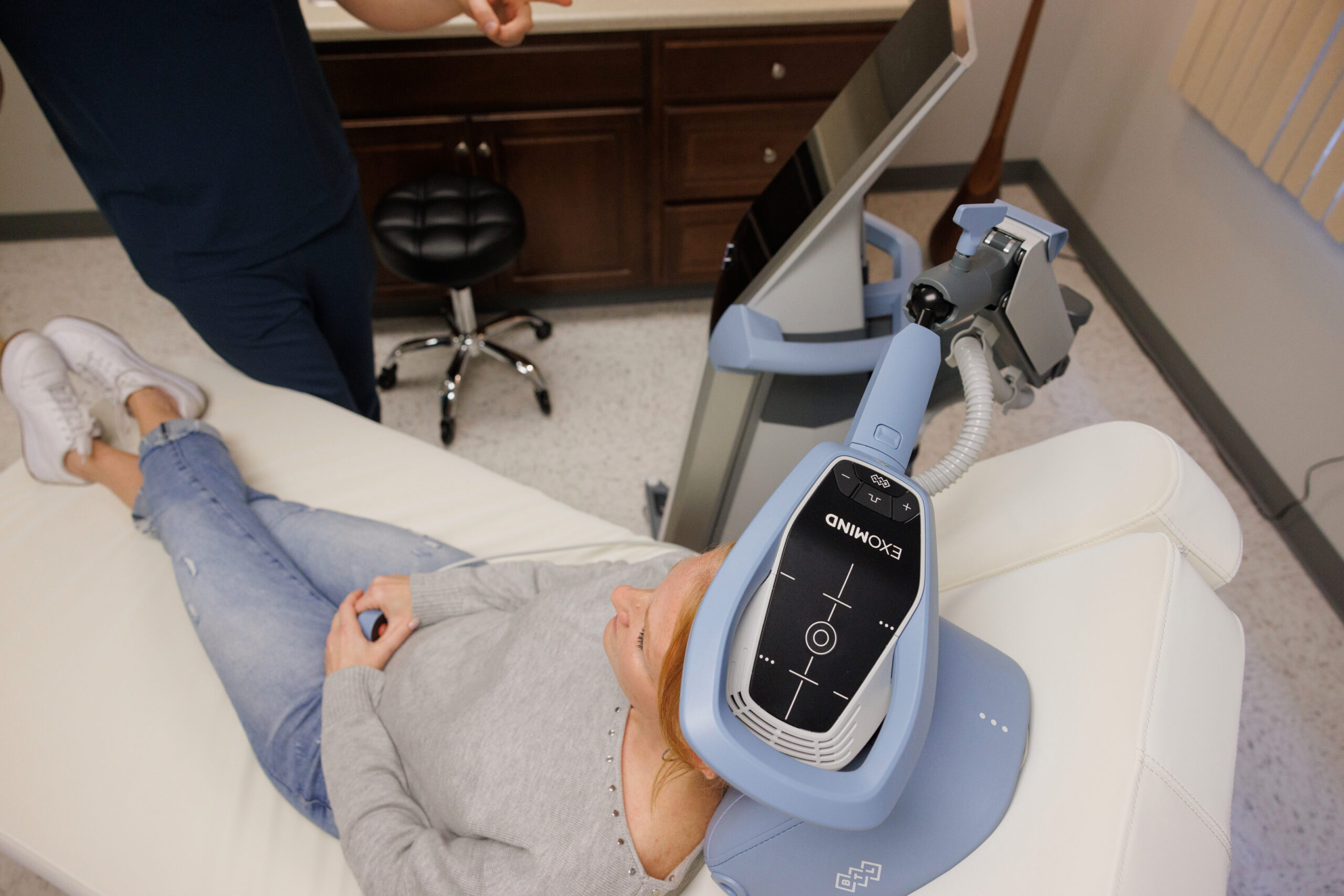
TMS is a medical treatment that uses a specialized coil placed against the scalp. That coil delivers brief magnetic pulses that pass through the skull and affect activity in a precise area of the brain. There is no surgery, no sedation, and no recovery time. You stay awake during treatment and can usually return to normal daily activities right after your session.
One common misunderstanding is that TMS sends electricity directly into the brain. That is not how it works. The device creates a magnetic field, and that magnetic field produces a small electrical effect only in the targeted brain tissue. The goal is not to overwhelm the brain. The goal is to help underactive or dysregulated circuits work more normally again.
TMS is also often confused with electroconvulsive therapy, or ECT. These are not the same treatment. TMS does not require anesthesia, does not cause a seizure, and does not affect the whole brain globally. It works in a focused and localized way. That difference matters for patients who want a non-drug, non-invasive option that fits into everyday life more easily.
Why TMS Focuses on Brain Networks
Symptoms like low mood, poor focus, emotional flatness, brain fog, and chronic stress do not usually come from one single “broken” part of the brain. They are more often connected to brain networks, meaning groups of regions that communicate with each other.
When those networks become underactive, overloaded, or stuck in unhealthy patterns, daily life can start to feel harder. Some people feel emotionally numb. Others deal with rumination, poor concentration, low motivation, or the sense that their nervous system never fully settles down.
TMS is designed to influence those patterns directly. Instead of working through the whole body like medication does, it targets areas of the brain involved in regulation and flexibility. Over time, repeated sessions may help the brain move away from rigid, unhelpful patterns and toward more balanced function.
What Part of the Brain Does TMS Target?
For many depression-related TMS protocols, the treatment targets a region called the dorsolateral prefrontal cortex, often shortened to DLPFC. This area sits near the front of the brain and plays an important role in attention, planning, emotional regulation, and decision-making.
In many people struggling with depression or mental exhaustion, this region appears to be less active than it should be. By stimulating this area, TMS may help strengthen activity in a part of the brain that influences deeper emotional and stress-response circuits.
This matters because mood is not controlled by one small spot in isolation. The brain works as an interconnected system. When one important control hub starts functioning better, the larger network may begin working better too.
How TMS Helps the Brain Change Over Time
TMS is not usually a one-session treatment because the brain changes through repetition. That is where the concept of neuroplasticity comes in. Neuroplasticity is the brain’s ability to adapt, reorganize, and build healthier patterns through repeated input.
Each TMS session acts like a gentle, targeted signal to the brain. With enough repetition, those signals may help support more stable changes in the circuits involved in mood, motivation, clarity, and emotional control.
This is one reason TMS can be helpful for some people even when medication has not given them enough relief. Medication changes chemistry throughout the body. TMS works differently by targeting the brain networks themselves.
What a TMS Session Feels Like
Many patients want to know what to expect before they try TMS. During treatment, people commonly feel a tapping, pulsing, or knocking sensation on the scalp. The machine also makes a clicking sound while it is running.
You remain awake the whole time. You can communicate during the session, and there is no sedation involved. Some people notice mild discomfort at first, especially during the early sessions, but this often becomes easier as settings are adjusted and the body gets used to the process.
For many patients, one of the biggest advantages is that treatment fits into real life. You do not need to block off the rest of your day for recovery.
How TMS Is Different From Medication
Medication can be helpful, but it is not the right fit for everyone. Some people do not get enough benefit. Others dislike the side effects or want to reduce how dependent they feel on medication changes alone.
TMS offers a different path. Because it targets specific brain circuits instead of affecting the whole body, it may appeal to people looking for a non-drug treatment option as part of a broader care plan.
That does not mean TMS replaces every other treatment. In many cases, the best approach is individualized. A neurologist-led evaluation helps determine whether TMS fits your symptoms, history, goals, and safety profile.
Who May Be a Good Candidate for TMS?
TMS is often considered for people dealing with depression, low motivation, persistent stress overload, poor focus, or related symptoms that have not improved enough with standard approaches. It may be especially relevant for patients who want to explore non-invasive care under medical supervision.
That said, not everyone is a candidate. Certain implanted devices, neurological conditions, or other safety factors may change whether TMS is appropriate. That is why proper screening matters. A thoughtful consultation helps determine whether this is the right next step or whether another treatment path makes more sense.
What Improvement Can Look Like
When TMS helps, improvement is often gradual rather than dramatic overnight. Many patients first notice small but meaningful shifts such as:
- More emotional range
- Less rumination
- Better mental clarity
- Improved energy
- Greater stress tolerance
- A better ability to engage with daily life
These changes may seem subtle at first, but they often reflect something important: the brain is becoming more flexible and regulated.
Why Neurologist-Led TMS Matters
TMS is not just about using a machine. It is about understanding the nervous system, symptoms, safety considerations, and the bigger picture of what may be driving how a person feels. That is why many patients value a neurologist-led approach, especially when symptoms overlap across mood, focus, recovery, and body-based stress patterns.
At Navira Brain & Body in Rochester, NY, care is centered on helping patients understand what may be happening beneath the surface, not just checking a box for treatment. For some people, TMS may be a strong next step. For others, the right answer may involve a broader plan for brain-body wellness and recovery.
Frequently Asked Questions About TMS
Is TMS the same as shock therapy?
No. TMS is very different from electroconvulsive therapy. It does not require anesthesia, does not intentionally cause a seizure, and works in a more targeted way.
Does TMS hurt?
Most people describe it as a tapping or knocking sensation on the scalp. Some mild discomfort can happen early on, but many patients tolerate it well as treatment progresses.
Can I drive after a TMS session?
In many cases, yes. Because there is no sedation or recovery period, patients can usually return to their normal routine right after treatment.
How long does it take to notice results?
It varies. Some people notice small changes earlier, while others improve more gradually over a series of sessions.
Final Thoughts
TMS is best understood as a targeted way to support brain circuits involved in mood, focus, and regulation. It is not a forceful treatment that overrides your brain. It is a non-invasive approach designed to encourage healthier network function over time.
If you have been searching for answers about low mood, mental fatigue, poor focus, or non-drug treatment options, understanding how TMS works is an important first step. The next step is figuring out whether it makes sense for you.
For people looking for TMS in Rochester, NY, a neurologist-led consultation can help clarify whether this treatment fits your symptoms, goals, and overall care plan.