

For People Seeking Peak Performance
Reclaim Calm
Feel Clearer. Think Faster. Perform Better.


“As a neurologist, I designed our treatments to give patients what I
wanted for my own family.”
You're in the right place if you're experiencing:
Generalized anxiety
PTSD and trauma-related hyperarousal
OCD
Burnout
Stress
What These Conditions Have in Common
Anxiety, OCD, and trauma-related symptoms are all rooted in dysregulated brain circuits — especially involving:
- Overactive limbic system (fear, emotion, threat detection)
- Hyperconnected default mode network (rumination, intrusive thoughts)
- Underactive prefrontal cortex (rational control, emotional regulation)
- Autonomic imbalance (chronic fight-or-flight state)
How our Treatments Help to Reclaim Calm
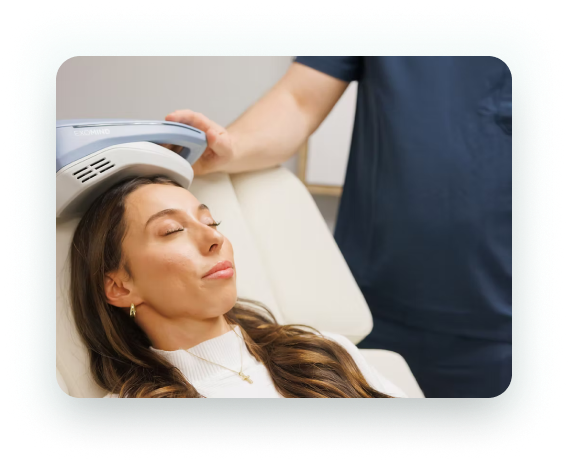
Exomind delivers precision-targeted magnetic stimulation to modulate overactive neural circuits linked to anxiety, OCD, PTSD, and chronic stress—helping restore a sense of calm, control, and cognitive clarity.
Calm Overactive Brain Regions
Exomind stimulation targets key regions like the amygdala and anterior cingulate, helping to quiet the fear response, reduce panic, and decrease hypervigilance.
Interrupt Trauma Loops
Magnetic stimulation can decrease connectivity between memory and fear centers, reducing flashbacks, emotional reactivity, and avoidance patterns.
Boost Cognitive Control Circuits
By stimulating the dorsolateral prefrontal cortex (DLPFC), treatment strengthens the brain’s regulatory system — improving control over anxious or obsessive thoughts.
Rebalance the Nervous System
The combination of brain and spinal stimulation (and OMT when appropriate) supports autonomic regulation — helping patients feel more grounded and less on edge
Support Emotional Reset
These treatments encourage the brain to form new, healthier patterns of thought and emotional response through neuroplasticity.
Our integrated approach also includes osteopathic treatment to release deep-seated tension and reset the body’s stress response—addressing the physical imprint of trauma and burnout at its source.
You’ve done the work. You’ve tried to manage. Now let your brain catch up. There’s a way forward.
Our TMS Contraindications & Exclusion Criteria
- Metal implants in the head or neck (e.g., aneurysm clips, cochlear implants, deep brain stimulators, etc)
- Implanted electronic medical devices (e.g., pacemakers, vagus nerve stimulators, insulin pumps, spinal stimulators, etc)
- History of epilepsy or any seizure
- Psychogenic non-epileptic seizures (PNES)
- Current or recent substance use disorder (typically within the last 6 months)
- History of psychosis or unstable psychiatric conditions (e.g., severe mania, untreated schizophrenia)
- Severe neurological disease (e.g., advanced dementia, brain tumors, etc)
- Pregnancy or intention to become pregnant (due to limited safety data)
- Active substance use disorder (cocaine, alcohol, opioids, etc)
- Current use of medications that significantly lower seizure threshold, this will be reviewed during your consult.
At this time, we do not provide TMS treatment to individuals under 18. Developing brains are more vulnerable, and we still lack long-term safety data.
What the trial session is for: