

Rewire the Brain. Clear the Fog.
Clear Brain Fog
From foggy to focused — reclaim your mental power


“As a neurologist, I designed our treatments to give patients what I wanted for my own family.”
You're in the right place if you're experiencing:
Brain fog from MS, TBI, or chronic stressopathy
Cognitive fatigue from hormonal shifts or burnout
Perimenopausal cognitive changes
What Brain Fog Really Is
Brain fog is a sign that your brain is processing less efficiently, often due to:
- Inflammation or immune changes
- Hormonal shifts
- Neurological injury
- Chronic stress or burnout
- Medication effects
- Disrupted neural connectivity
You may notice slower thinking, poor focus, forgetfulness, mental fatigue, and reduced clarity.
How our Treatments Help with Brain Fog
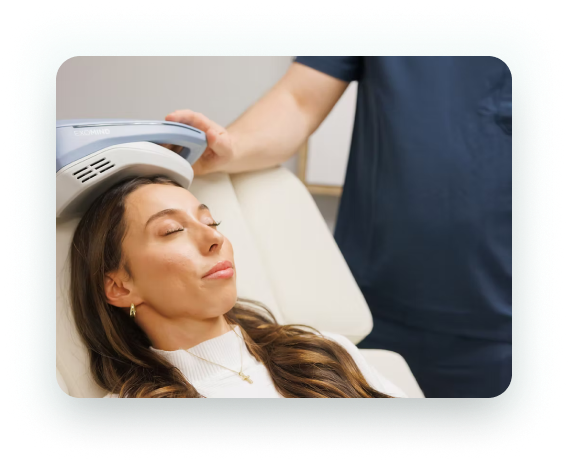
We use Exomind, a gentle, non-invasive magnetic stimulation that helps restore focus, clarity, and cognitive energy. When brain fog is linked to tension or injury, we may add osteopathic care to support recovery.
Activate Underperforming Brain Networks
Exomind stimulation targets the prefrontal cortex and attention networks, boosting neural activity in regions tied to clarity, memory, and executive function.
Enhance Neuroplasticity and Connectivity
Exomind stimulation supports stronger connections between brain regions so information flows more efficiently.
Reduce Neural Fatigue
Exomind gently normalizes overworked circuits to ease fatigue and improve mental stamina.
For patients with brain fog due to dysautonomia or post-stress shutdown, our approach helps rebalance sympathetic/parasympathetic tone, improving energy and alertness.
Optional OMT Support
OMT helps improve brain fog by releasing musculoskeletal and craniosacral restrictions that can impair circulation, nervous system function, and cerebrospinal fluid flow.
Mental clarity is within reach. You can reclaim your sharpness, energy, and focus — and our Clear Brain Fog program is designed to get you there.
Our TMS Contraindications & Exclusion Criteria
- Metal implants in the head or neck (e.g., aneurysm clips, cochlear implants, deep brain stimulators, etc)
- Implanted electronic medical devices (e.g., pacemakers, vagus nerve stimulators, insulin pumps, spinal stimulators, etc)
- History of epilepsy or any seizure
- Psychogenic non-epileptic seizures (PNES)
- Current or recent substance use disorder (typically within the last 6 months)
- History of psychosis or unstable psychiatric conditions (e.g., severe mania, untreated schizophrenia)
- Severe neurological disease (e.g., advanced dementia, brain tumors, etc)
- Pregnancy or intention to become pregnant (due to limited safety data)
- Active substance use disorder (cocaine, alcohol, opioids, etc)
- Current use of medications that significantly lower seizure threshold, this will be reviewed during your consult.
At this time, we do not provide TMS treatment to individuals under 18. Developing brains are more vulnerable, and we still lack long-term safety data.
What the trial session is for: