Your answers suggest TMS could help.
Learn how EXOMIND TMS works and what to expect, from your first consult to your day-to-day sessions. This could be the first step toward feeling more like yourself again.
Start by Getting Answers, Confirming Safety, and Trying a Session Before Committing
You don’t have to guess where to start. This visit is where we answer your questions, confirm safety, and create a clear first step.
Personalized Neurologist Assessment
60 minutes - $300
Review of both mood and pain symptoms
Discussion of treatment options and sequencing
Same-day treatment when appropriate
No commitment beyond this visit.
If you don’t feel meaningful benefit or clarity about next steps, we don’t continue.
When mood and pain overlap, treating one alone is often not enough
I’m Dr. Myers, a Board-certified neurologist and headache specialist providing FDA-cleared neuromodulation for mood and pain.
Many people experience both ongoing pain and symptoms like low mood, anxiety, or emotional exhaustion. These aren’t separate problems, they’re often driven by overlapping nervous system circuits.
As a neurologist, my role is to help determine where to start and how to sequence treatment so both improve.

Our Approach
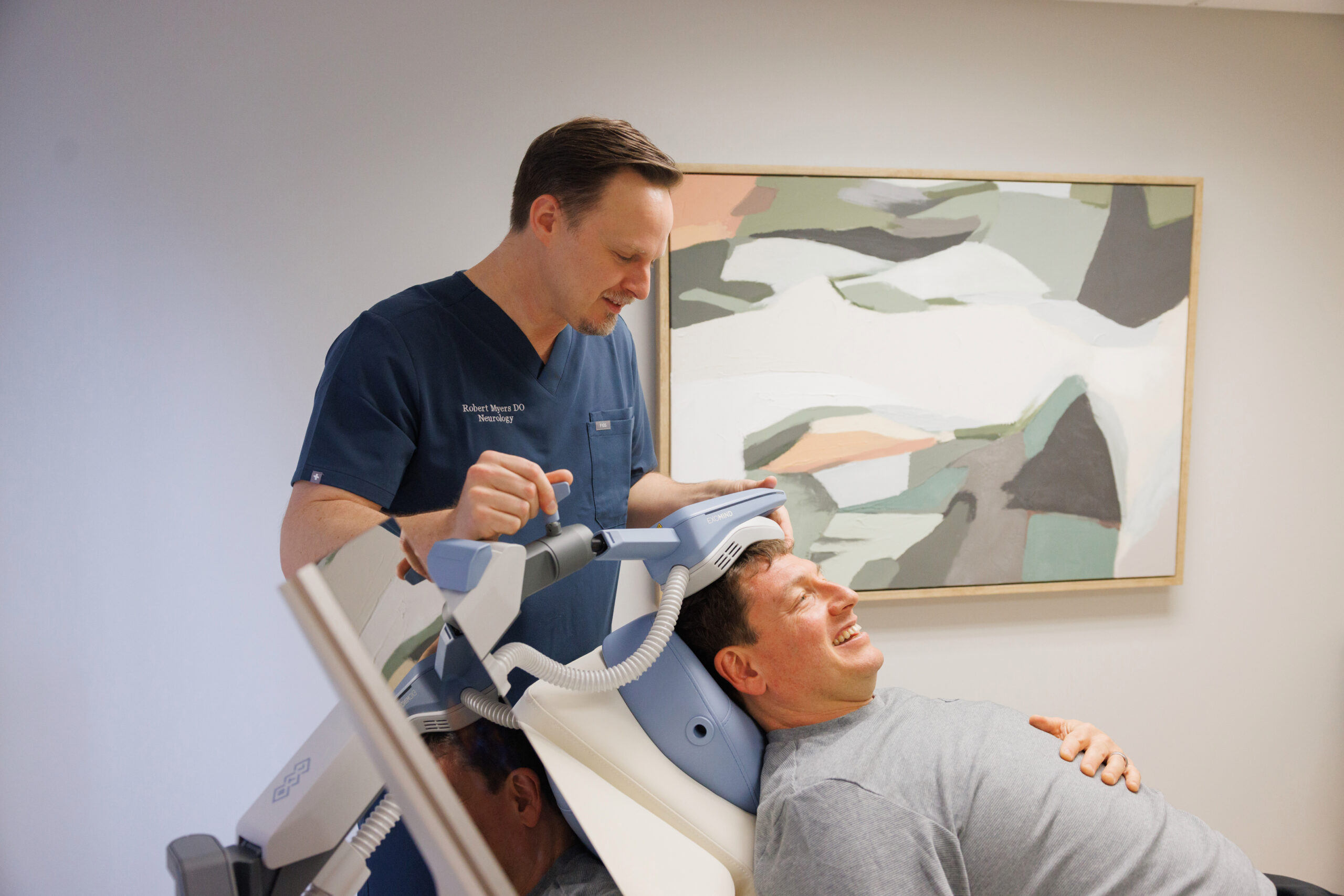
Exomind TMS
FDA-cleared brain-based magnetic stimulation for mood conditions
Peripheral Magnetic Stimulation
FDA-cleared treatment for chronic pain
Some people benefit from starting with mood treatment first.
Others do better addressing pain first.
In many cases, improvement in one helps the other.
There’s no one-size-fits-all order,and that’s intentional.
What people often notice
When mood and pain are addressed thoughtfully:
- Pain can feel less intense or less consuming
- Movement can feel easier
- Emotional resilience and clarity often improve
- The nervous system feels calmer overall
Hear it from real patients
Below are short patient stories about EXOMIND TMS and what improved over time, including mood, resilience, day-to-day functioning, and how symptoms felt week to week. Results vary, but these videos show what “meaningful improvement” can look like in real life.